
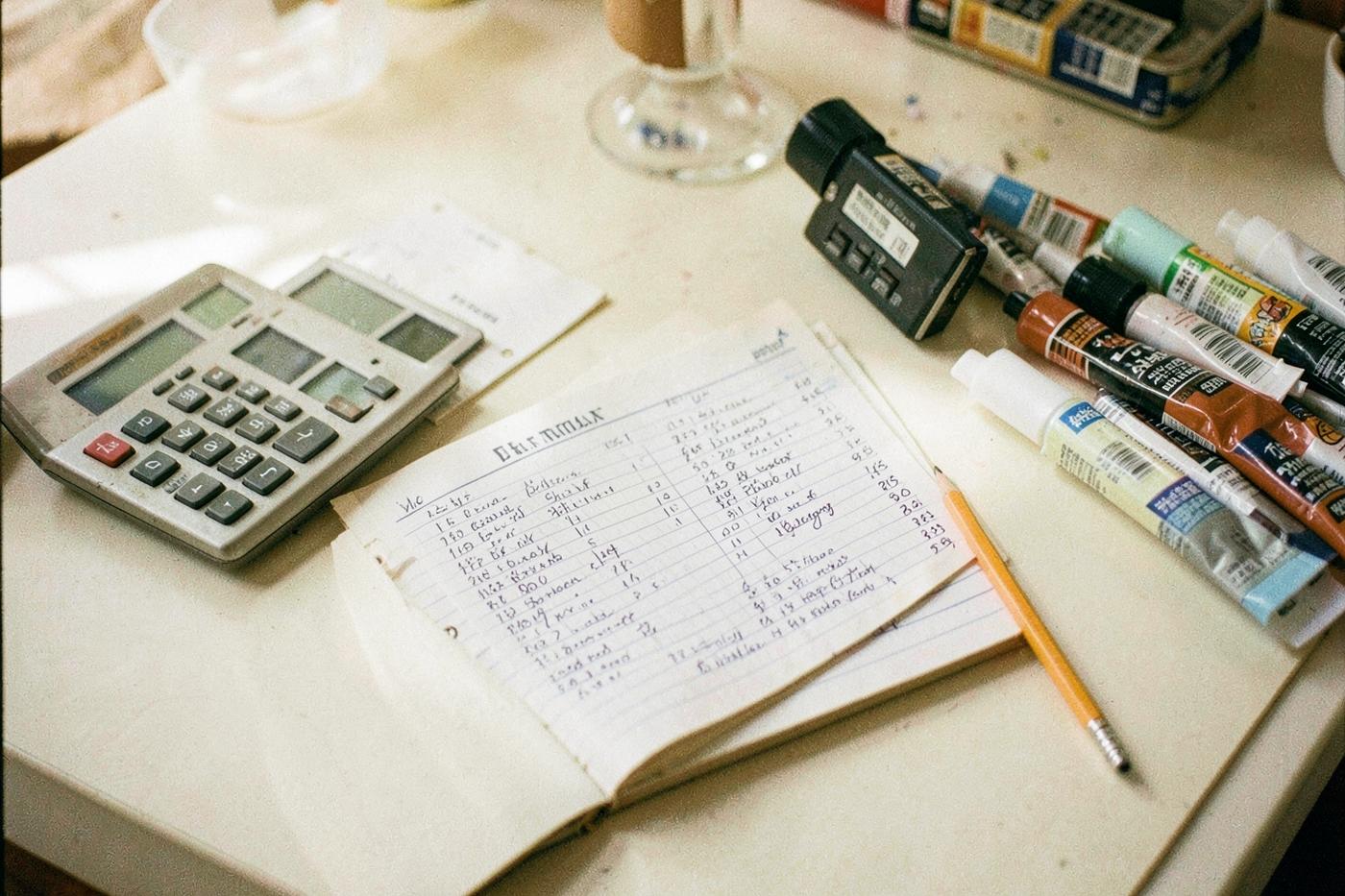
Irregular income is manageable when it is measured. A minimum system for tracking, separating and planning the money in your practice.
Artistic income is irregular by nature. That does not make it unplannable — it makes measurement more important, not less.
Separate the Practice From the Household
Open a dedicated account for the practice. Every sale, grant and material purchase moves through it. Within a year you will know what your work actually costs to make.
Track Four Numbers
- Income by source: sales, commissions, grants, teaching.
- Direct costs: materials, framing, shipping, documentation.
- Fixed costs: studio rent, insurance, software, subscriptions.
- Tax set aside, moved on the day money arrives.
A reserve of three months of fixed costs buys you the ability to refuse the wrong opportunity.
Plan Annually, Review Quarterly
Set a target for the year, divide it across your likely channels, and review every quarter. The purpose is not precision. It is knowing early enough to change course.
More Resources for Visual Artists
How to Sell Your Art Online Without Losing Your Voice
A practical framework for presenting, pricing and placing your work online — built around your practice rather than around a platform.
How to Price Your Art With Confidence
Pricing is a professional decision, not a personal judgement. A repeatable method for setting, holding and raising your prices.
How to Market Yourself as an Artist Without Performing
Sustainable visibility comes from a small number of honest, repeatable habits — not from constant content production.